Why LOUD beating Vitality in the VALORANT Champions Shanghai grand final was the better story and the better series
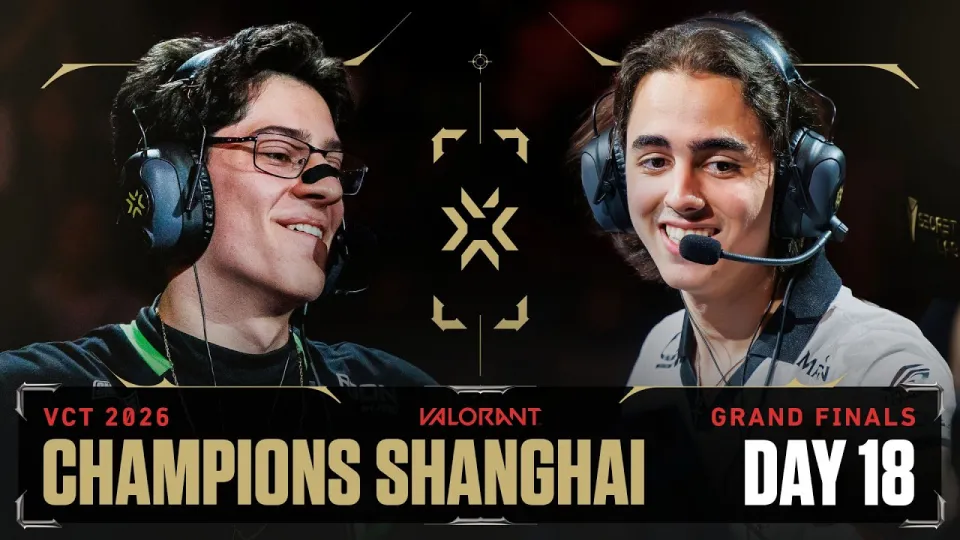
Video: LOUD vs. VIT — VALORANT Champions Shanghai — Grand Final
Need articles like this for your video? They help promote it on YouTube and Google — order them in the Telegram bot @sat_sit_bot. It writes articles around your video, embeds the video and publishes them on popular niche websites (no ads). Free trial — 50 articles.
· based on the channel VALORANT Champions Tour
Key takeaways
- LOUD defeated Vitality in the VALORANT Champions Shanghai grand final, the last match of the 2026 VCT season.
- Shanghai ran from September 24 to October 18, with 16 teams from Americas, CN, EMEA and Pacific.
- LOUD's run was built on Erde, whose mother passed away, and on Tkzin's aggressive play.
- The deciding map echoed LOUD's 2022 title run, when a Chamber pushed into the enemy spawn.
- Chronicle was the last Vitality player standing in the final moments of the series.
For a neutral viewer, LOUD beating Vitality in the VALORANT Champions Shanghai grand final is the better outcome: it delivered a first-time world champion, a personal story around Erde and an aggressive, watchable style of play, while Vitality's loss still produced one of the most respected runs of the 2026 season. The match closed a VCT year in which new contenders broke through at both Masters events, and it confirmed that the gap between the top Americas, EMEA, CN and Pacific teams is now measured in rounds, not regions. Official updates and clips from the event are posted by VALORANT Esports on X.
What made LOUD vs Vitality the better final
The final worked because both teams arrived with a clear identity and neither could hide behind a comfort pick. Shanghai hosted 16 teams from the Americas, CN, EMEA and Pacific between September 24 and October 18, and the bracket produced a grand final between a Brazilian side chasing a second world title and a European organization that had been knocking on the door all year. LOUD's win was not a fluke of one hot map: it came from disciplined retakes, early-map pressure and a willingness to take duels that most teams avoid in elimination rounds.
Vitality, for its part, played the final the way it played the whole tournament — structured, patient, and reliant on Chronicle to hold the last line. That is exactly why the closing moments landed so hard: Chronicle was the last Vitality player alive when the series ended, a detail that fans immediately read as the passing of an era. For a viewer choosing which side of the story to follow, LOUD offers the more complete arc — a team that was not the favorite at the start of the event and finished it as the 2026 VALORANT World Champion.
The Erde story that turned a result into a moment
Erde's performance in Shanghai became the emotional center of the tournament, and it is the main reason the grand final is remembered beyond the scoreline. His mother passed away during the event, and he chose to keep playing; the crowd and the broadcast leaned into it, and the opening ceremony was widely praised as one of the best the Champions stage has produced. His teammates and opponents alike treated the title as something owed to him, and the post-match scenes did more for the human side of VALORANT esports than any highlight reel.
That context matters for how the final should be judged. A player carrying that weight and still delivering on the biggest map of the year is a different kind of clutch from a highlight montage. It also explains why so many reactions after the match focused on Erde first and the trophy second — the result gave the 2026 season a face, which is something a repeat champion rarely does.
How LOUD actually won the map that decided it
The series turned on a map that LOUD had already made famous in its own history, and the parallel was impossible to miss. In 2022, LOUD won a crucial map on the same pick when a Chamber player pushed all the way into the enemy spawn; in Shanghai, the same kind of over-aggressive push — this time from a different agent and a different player — broke Vitality's setup again. Three things stood out in the deciding map:
- Early information. LOUD took space before Vitality could set its default, forcing rotations that opened the mid-round flank.
- Tkzin's entry timing. Tkzin consistently arrived a beat earlier than Vitality's anchor expected, and the traded kills kept LOUD's economy intact.
- Retake discipline. When Vitality did plant, LOUD's retakes were coordinated rather than desperate, with utility spent to isolate Chronicle instead of dueling him in the open.
Vitality's counterplay was solid — it slowed the pace, forced long rounds and won several clutches — but every time the series looked level, LOUD found a single aggressive read that flipped the momentum. That pattern, repeated across maps, is what separates a champion from a team that merely has a good tournament.
Questions fans asked after the grand final
Most of the debate after the match was less about the result and more about how to place it in VCT history. Three themes came up repeatedly.
- Was LOUD the favorite? No. Few expected LOUD to lift the trophy at the start of the event, which is precisely why the win registered as a shift in the competitive order rather than a confirmation of it.
- Did Vitality underperform? Not really. Vitality reached the final through a difficult bracket and lost to a team that peaked at the right moment; the last-man-standing image of Chronicle is a symbol of a close series, not a collapse.
- Does this change the regional hierarchy? It reinforces it. Two different Masters champions in 2026 and a Champions title for the Americas side show that preparation and adaptation now matter more than roster reputation.
What the Shanghai final tells us about the 2026 season
Shanghai was the season's stress test, and it passed. A 16-team field across four regions, a three-week schedule from late September into mid-October, and a final that produced a first-time champion gave the year a coherent narrative: new contenders can win, but only if they can hold their structure under a Champions crowd. LOUD's title run fits that thesis — it was built on individual brilliance from Erde and Tkzin, but it was won with team-level decisions in the mid-round.
For anyone tracking the competitive scene, the practical takeaway is to watch how teams trade space rather than how many kills they collect. The final was decided by who took the first inch of the map, not by who won the most aim duels, and that is a more repeatable skill than a hot streak.
Where to follow VALORANT esports after the final
All official channels from the broadcast are listed below, so you can keep up with post-event content, player interviews and the next VCT cycle.
- X/Twitter: https://x.com/valorantesports
- Facebook: https://www.facebook.com/ValorantEsports/
- Instagram: https://www.instagram.com/valorantesports/
- TikTok: https://www.tiktok.com/@valorantesports
- Twitch: https://www.twitch.tv/valorant
The verdict on LOUD vs Vitality
LOUD's win over Vitality is the better final because it gave the season a genuine story and a champion nobody had penciled in, while still respecting what Vitality built over the year. The series had a clean tactical identity on both sides, a deciding map with a direct line back to LOUD's 2022 history, and an emotional core around Erde that will outlast the scoreline. Chronicle standing alone at the end is the image that ties it together — one era's last stand against a new one arriving. The full breakdown is available on the VALORANT Champions Tour channel, and for schedule news, clips and announcements, check the official VALORANT Esports X account.
Questions & answers
Who won the VALORANT Champions Shanghai grand final?
LOUD won the grand final against Vitality, becoming the 2026 VALORANT World Champion. The title was LOUD's second world-level triumph and the first for several players on the roster, including Erde and Tkzin, who were central to the run.
Why was the deciding map compared to LOUD's 2022 match?
In 2022, LOUD won a key map on the same pick after a Chamber player pushed into the enemy spawn. In Shanghai, a similarly aggressive push from a different agent and player broke Vitality's setup, and fans quickly drew the parallel between the two moments.
Did Vitality play badly in the final?
Vitality reached the final through a difficult bracket and kept the series close, winning several clutches and slowing LOUD's pace. Chronicle being the last player alive at the end reflected how tight the maps were rather than a collapse from Vitality.
Where can I follow VCT news after Champions?
The official VALORANT Esports channels on X, Facebook, Instagram, TikTok and Twitch carry announcements, interviews and post-event content. The X account at https://x.com/valorantesports is the fastest source for schedule and roster updates.
Source: LOUD vs. VIT — VALORANT Champions Shanghai — Grand Final · Markdown version